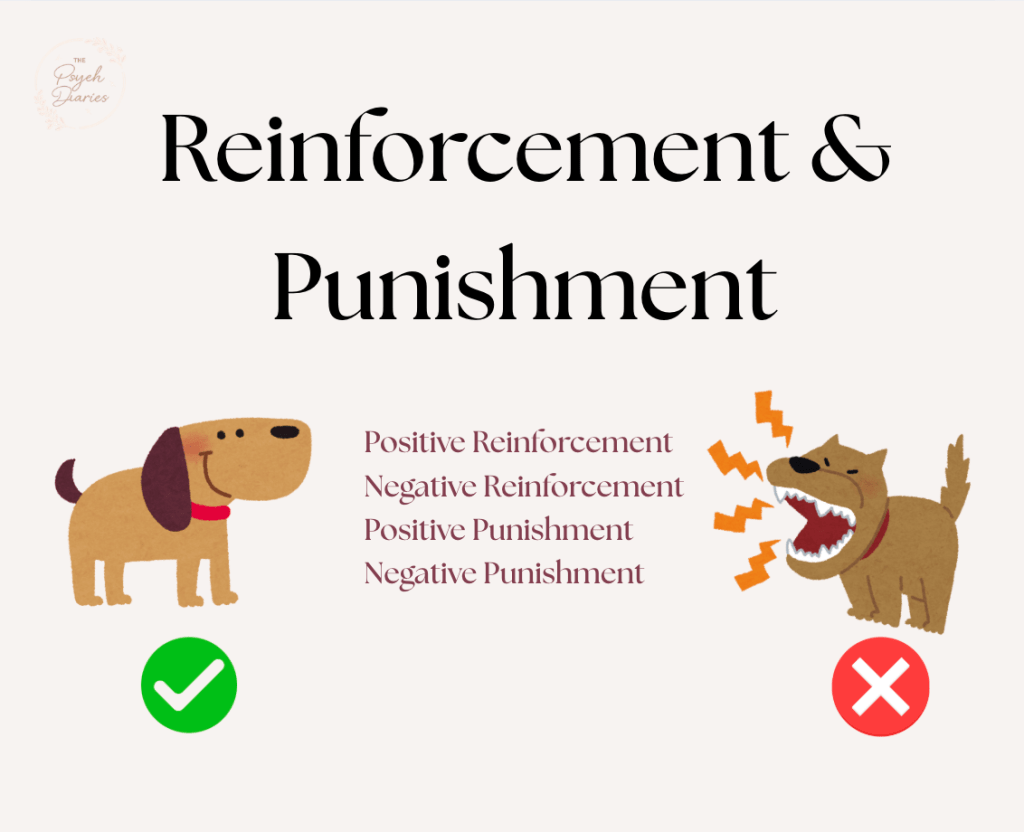
Quick Definitions
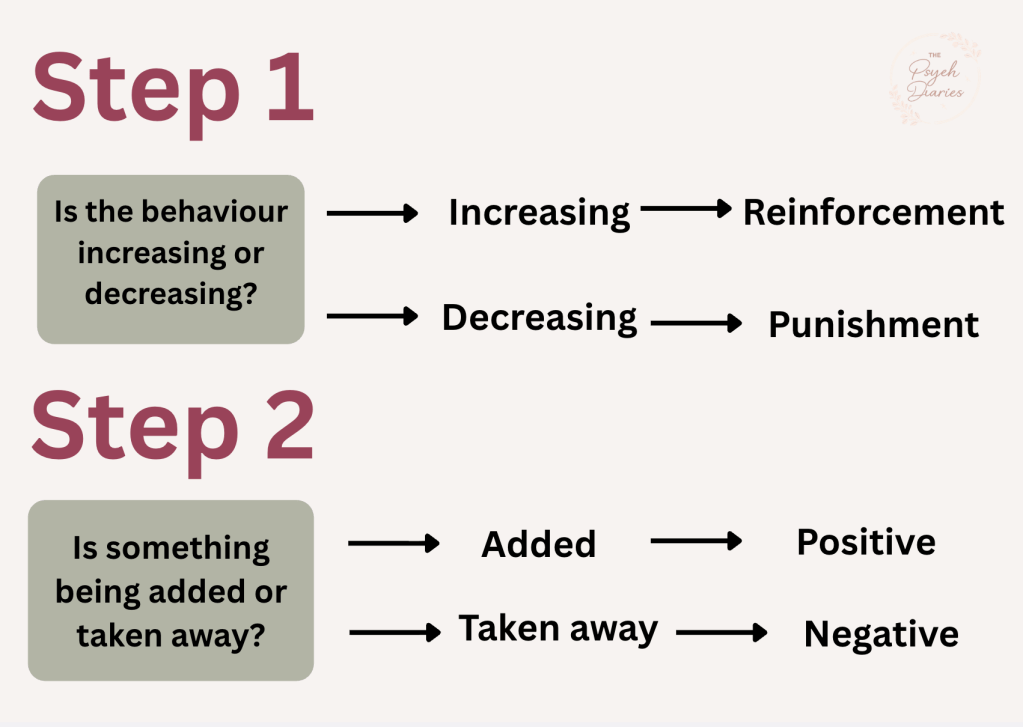
- Punishment: A stimulus that aims to reduce the frequency of a behaviour.
- Reinforcement: A stimulus that aims to increase the frequency of a behaviour.
- Positive: Something is ADDED
- Negative: Something is TAKEN AWAY
Key Differences (Mini Cheat Sheet)
| Concept | Punishment | Reinforcement |
|---|---|---|
| Positive | A bad thing is added to decrease behaviour | A good thing is added to increase behaviour |
| Negative | A good thing is taken away to decrease behaviour | A bad thing is taken away to increase behaviour |
Find the correct answer in 2 simple steps!
MCQ Worksheet (15 Qs)
Record your answer, then open the toggle to check your answer + explanation. Good luck!
1) What is the BEST definition of reinforcement?
- A) Anything that feels “nice”
- B) A consequence that increases a behaviour
- C) A consequence that decreases a behaviour
- D) A reward (always)
Answer + explanation
️Correct answer: B
Reinforcement = consequence that increases a behaviour. It does not have to be “nice”… it just has to work.
2) What is the BEST definition of punishment?
- A) Anything that feels “mean”
- B) A consequence that increases a behaviour
- C) A consequence that decreases a behaviour
- D) Sending someone to jail
Answer + explanation
Correct answer: C
Punishment = consequence that decreases a behaviour. Not “mean”, not “unfair” it’s just about behaviour going down.
3) A student studies harder because they get praise from their tutor. This is:
- A) Positive reinforcement
- B) Negative reinforcement
- C) Positive punishment
- D) Negative punishment
Answer + explanation
Correct answer: A
Something is added (praise) and the behaviour increases (studying). Positive = add. Reinforcement = behaviour up.
4) You buckle your seatbelt to stop the car’s loud BEEP BEEP BEEP. This is:
- A) Positive reinforcement
- B) Negative reinforcement
- C) Positive punishment
- D) Negative punishment
Answer + explanation
Correct answer: B
You remove something annoying (beeping) and the behaviour increases (seatbelt wearing). Negative = remove. Reinforcement = behaviour up.
5) A child stops yelling because their parent takes away their iPad. This is:
- A) Positive reinforcement
- B) Negative reinforcement
- C) Positive punishment
- D) Negative punishment
Answer + explanation
Correct answer: D
Something is removed (iPad) and the behaviour decreases (yelling). Negative = remove. Punishment = behaviour down. I fear the iPad kids.
6) Someone speeds less because they receive a speeding fine. This is:
- A) Positive reinforcement
- B) Negative reinforcement
- C) Positive punishment
- D) Negative punishment
Answer + explanation
Correct answer: C
Something is added (fine) and the behaviour decreases (speeding). Positive = add. Punishment = behaviour down.
7) What does “positive” mean in operant conditioning?
- A) Good / nice
- B) Bad / mean
- C) Adding something
- D) Taking something away
Answer + explanation
Correct answer: C
Positive = add. Not “good”. You can add a lot of bad things to a situation…
8) What does “negative” mean in operant conditioning?
- A) Mean / evil energy
- B) Removing something
- C) Adding something
- D) Trauma
Answer + explanation
Correct answer: B
Negative = remove. Not “bad”. Not “evil”. Not “cancelled”. Just removed.
9) If a consequence happens but the behaviour DOESN’T change, then technically it is:
- A) Still reinforcement because it was supposed to be
- B) Still punishment because it felt harsh
- C) Neither reinforcement nor punishment
- D) A personal attack
Answer + explanation
Correct answer: C
Reinforcement/punishment is defined by the behaviour change. If behaviour doesn’t go up or down, it’s just… an event that happened.
10) A student stops arriving late because the tutor publicly calls them out. This is MOST likely:
- A) Positive reinforcement
- B) Negative reinforcement
- C) Positive punishment
- D) Negative punishment
Answer + explanation
Correct answer: C
Something is added (public call-out) and behaviour decreases (lateness). Positive punishment.
11) A child does chores so their parent stops nagging them. This is:
- A) Positive reinforcement
- B) Negative reinforcement
- C) Positive punishment
- D) Negative punishment
Answer + explanation
Correct answer: B
Nagging is removed and chores increase. Negative reinforcement. Your parent just discovered behaviourism, congratulations.
12) A kid cleans their room because they get $5. This is:
- A) Positive reinforcement
- B) Negative reinforcement
- C) Positive punishment
- D) Negative punishment
Answer + explanation
Correct answer: A
Money is added and cleaning increases. Positive reinforcement. Capitalism begins in the home.
13) A student loses participation marks for using their phone in class, so they stop. This is:
- A) Positive reinforcement
- B) Negative reinforcement
- C) Positive punishment
- D) Negative punishment
Answer + explanation
Correct answer: D
Something is removed (marks/privilege) and phone use decreases. Negative punishment. The GPA police have arrived.
14) A behaviour increases because something unpleasant is removed. This is:
- A) Positive reinforcement
- B) Negative reinforcement
- C) Positive punishment
- D) Negative punishment
Answer + explanation
Correct answer: B
That sentence is the definition of negative reinforcement. Remove gross thing → behaviour goes up.
15) Which combo correctly matches the terms?
- A) Positive = good, Negative = bad
- B) Reinforcement = behaviour down, Punishment = behaviour up
- C) Positive = add, Negative = remove
- D) Reinforcement/punishment are defined by intentions
Answer + explanation
Correct answer: C
Positive = add. Negative = remove. Reinforcement = behaviour increases. Punishment = behaviour decreases.
 The Psych Diaries
Leave a comment